Posts

4-crankcase ventilation and induction systems(function, operation, inspection, and service) - automobile engineering

Image
    in the previous sections we had discuss : - Classification of Internal Combustion Engines and Engine Components (Course) - Internal Combustion Engines Components 2 (Course)   3- Internal Combustion Engines cooling and lubrication system (Course)   In This  section we will discuss : -Describe the crankcase ventilation systems, function, operation, inspection, and service. -Describe the induction systems, functions, operation, inspection, and service -Describe engine-starting devices/systems for diesel and gas engines.     SECTION 4 Objective 8 Describe the crankcase ventilation systems, function, operation, inspection, and service. CRANKCASE VENTILATION Function of the Crankcase Ventilation System The crankcase ventilation system keeps the engine crankcase purged of blowby and water vapour. BIowby is burned and unburned gases that escape past the rings into the crankcase. The water comes from condensatio...

3- Internal Combustion Engines cooling and lubrication system (automobile engineering)

Image
  in the previous sections we had discuss : Classification of Internal Combustion Engines and Engine Components (Course) Internal Combustion Engines Components 2 (Course)   In This  section we will discuss : -Describe and explain the operation of a typical cooling system for an industrial ICE. -Describe and explain the operation of a typical lubrication system for an industrial ICE. SECTION 3 Objective 7 Describe and explain the operation of a typical cooling system for an industrial ICE. ENGINE COOLING Small internal combustion engines are often air-cooled. Each cylinder or motor block is equipped with many thin fins creating an extensive cooling surface. This has the advantages of being simple and cheap, but the disadvantage of lack of control of the engine temperature because the cooling efficiency depends on the weather conditions. For high compression diesel engines, the combustion temperature can exceed 2000°C, and only 30 - 35% of the he...

Internal Combustion Engines Components 2 (automobile engineering)

Image
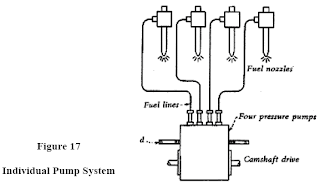
in the previous section we had discuss : Classification of Internal Combustion Engines and Engine Components (Course)     that  we had discussed in : -Classification of Internal Combustion Engines -Internal Combustion Engine Components     lets begin our section which we will discuss : -Describe individual pump, distributor, and common rail fuel injection systems for a diesel engine. -Explain the purpose and describe the operation of superchargers and turbochargers - Describe the cooling systems, function operation, inspection, and service.       SECTION 2 Objective 3 Describe individual pump, distributor, and common rail fuel injection systems for a diesel engine. THE FUEL INJECTOR The diesel engine, unlike some gasoline engines, does not use a carburetor to mix the fuel and air nor does it use a spark to ignite the fuel-air mixture. Instead, the diesel uses an injection system to spray the fuel into the engine cylinder. The fuel...

Classification of Internal Combustion Engines and Engine Components (automobile engineering)

Image
Diesel Engine Contents Objective 1 : Classification of Internal Combustion Engines Objective 2 : Internal Combustion Engine Components Objective 3 : The Fuel Injector Objective 4 : Supercharging Objective 5 : Cooling System Objective 6 : Engine Cooling Objective 7 : Lubricating Oil Systems Objective 8 : Crankcase Ventilation Objective 9 : Induction and Exhaust Systems Objective 10 : Starting Methods Objective 11 : Engine Monitoring and Protection Objective 12 : Basic Engine Tune-up Objective 13 : Preventive Maintenance Programs Learning Outcome When you complete this learning material, you will be able to: Explain the operating principles, designs, support systems, and operation of industrial internal combustion engines (ICE). Learning Objectives You will specifically be able to complete the following tasks: 1. Explain the principles of compression ignition; describe the operating cycles for twostroke and four-stroke designs. 2. Identify...